· 2 min read
What Happens in Your Brain When You Listen to Music? Insights from Prof Lauren Stewart
We attended a fascinating talk on how music affects the brain – from earworms to therapeutic breakthroughs.

Anatoly Silko
Founder, Rocking Tech
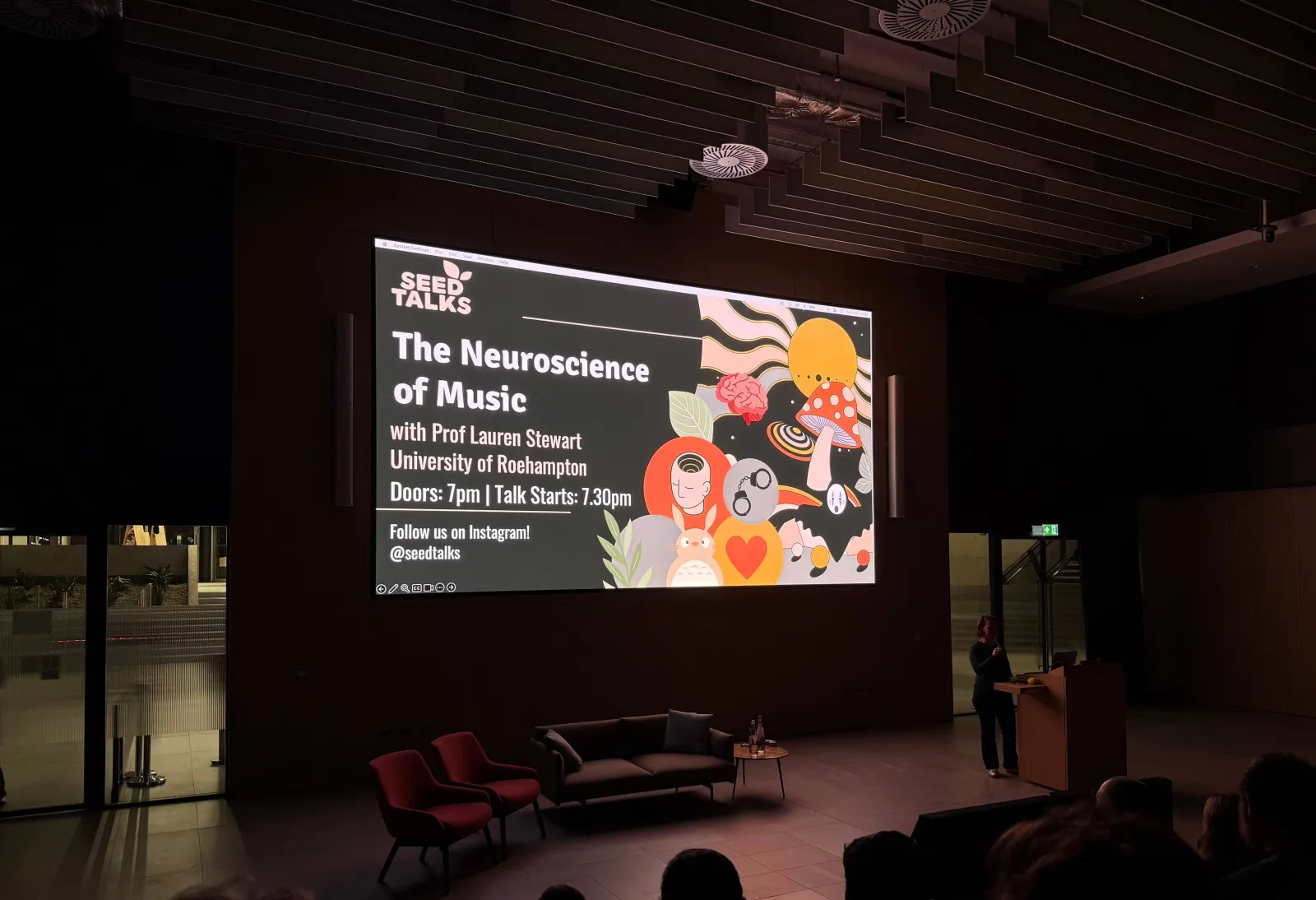
Music is the most underutilised health asset on the planet. That was one of the standout claims from Professor Lauren Stewart's talk at Unity Place in Milton Keynes this week.
Hosted by Seed Talks, the event brought together a curious crowd to explore what happens in our brains and bodies when we listen to music – and why it matters far more than most of us realise.
Prof Stewart, Professor of Psychology at the University of Roehampton, has spent decades researching how we perceive and process musical sound. Her work spans everything from congenital amusia – the clinical term for being genuinely "tone-deaf" – to the phenomenon of earworms, those songs that lodge in your head uninvited.
Prof Stewart is perhaps best known for her collaboration with Grammy-winning artist Imogen Heap on The Happy Song in 2016. Commissioned by C&G Baby Club, the track was scientifically designed to make babies happy. Stewart and fellow Goldsmiths psychologist Dr Caspar Addyman tested melodies on dozens of infants, monitoring their movements, facial expressions and heart rates. The result was a 168 BPM track packed with sneezes, animal sounds and baby laughter – elements proven to spark joy in six to 24-month-olds. It remains one of the most successful applications of music psychology research to date.
What struck us most was how universally sophisticated our musical abilities are. Simply by being exposed to the music of our own culture, we develop remarkably complex listening skills – no formal training required. From the sing-song interactions between infants and caregivers to the way music shapes our social identities in later life, it is woven into our development from day one.
The talk also explored the edges of musical experience: those who perceive too little music due to neurological differences, and those who experience too much – including musical hallucinations. These extremes, Prof Stewart explained, offer valuable insights into how the brain organises sound.
Perhaps the most compelling section focused on therapeutic applications. Prof Stewart shared examples from stroke rehabilitation and her current work on perinatal mental health in sub-Saharan Africa through the CHIME Project. The evidence suggests music-based interventions can support recovery and wellbeing in ways that are only beginning to be understood.
For a tech company based in Milton Keynes, it was a reminder that innovation is not always about code and platforms. Sometimes it is about understanding the tools humans have used for millennia – and finding new ways to apply them.
We left with plenty to think about – and a few earworms for good measure.