One workflow, automated properly —
and your team taught to run it
We find the process costing you the most time, build it to production standard, and hand it over documented and owned by you. Not a pilot. Not a chatbot bolted onto your website.
Trustpilot · 10+ years · Trusted by NHS & universities

Most AI projects fail.
The reason is not the model.
You have probably tried a few tools already. A chatbot on the site, a writing assistant in a browser tab. Neither stuck.
MIT's 2025 research found only around 5% of business AI pilots reach measurable value. The same study found something more useful: projects delivered with an outside partner succeeded 67% of the time. Internal builds managed 33%.
The difference is not the model. It is integration, governance, and whether anyone actually uses the thing six months later. That is the part we are built for.
What We Automate For You
We choose the single workflow that gives you the clearest return, build it so it works reliably, and hand it over with the training and documentation your team needs to own it.
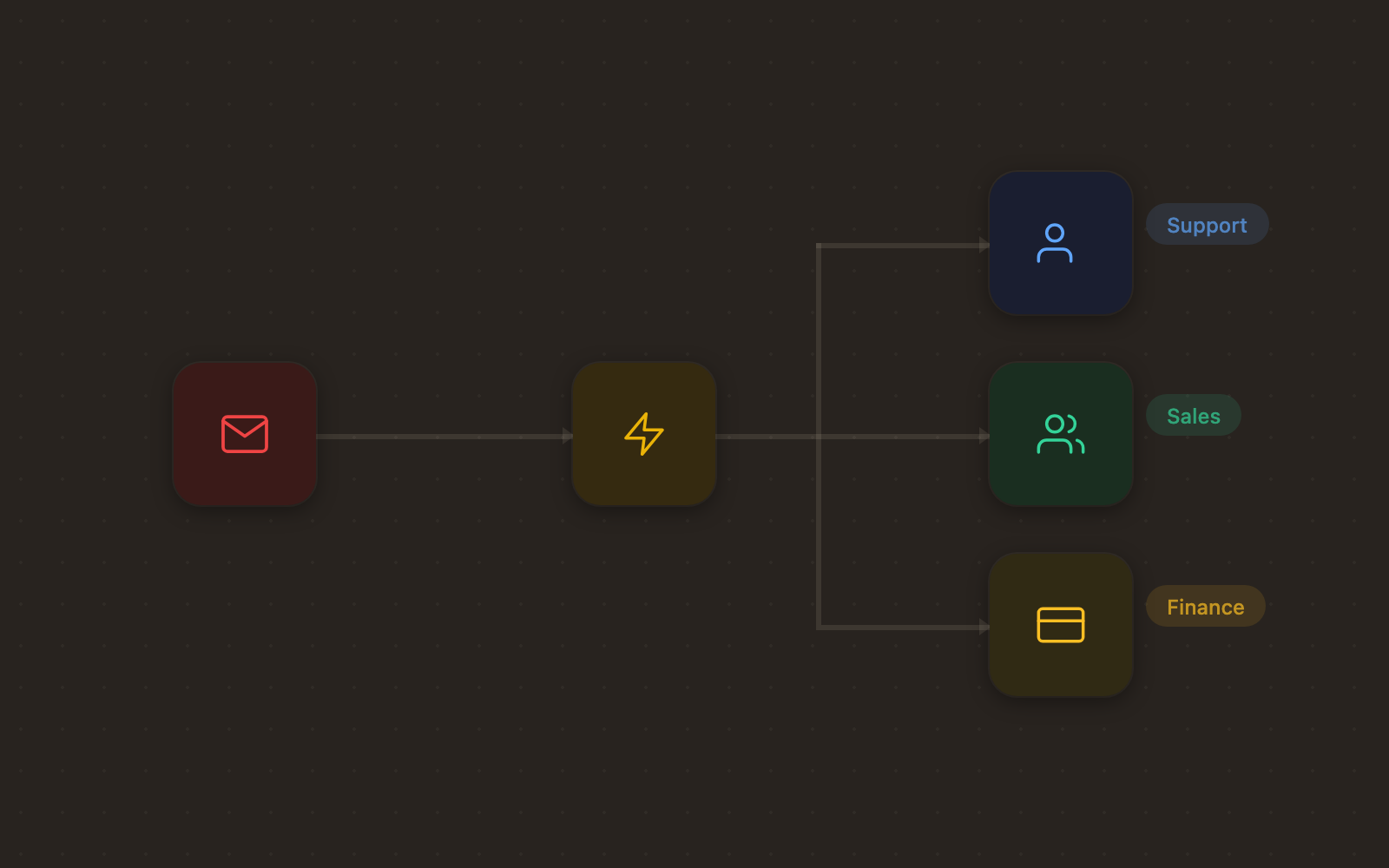
Inbound triage
Every enquiry read, understood and routed in seconds. Incoming emails and form submissions are classified by intent, urgency and sentiment, then sent to the right person with a suggested reply.
Webhooks · Claude · OpenAI · Inbox / helpdesk
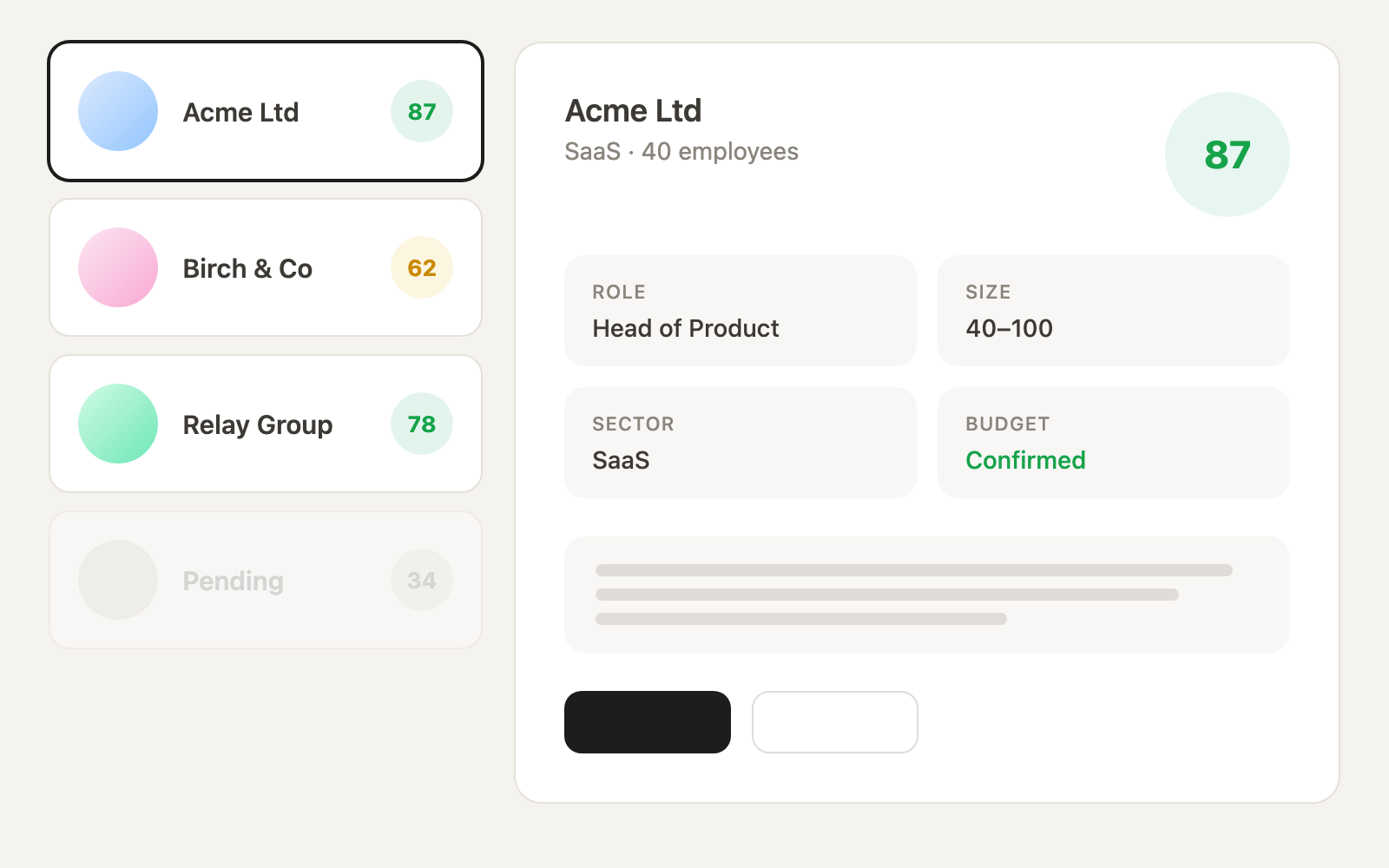
Lead qualification
Leads scored with a reason, not a black-box number. New CRM leads are enriched and scored for fit and intent, each with a short written rationale, then routed to sales or nurture.
Enrichment · Claude · OpenAI · Pipedrive · HubSpot
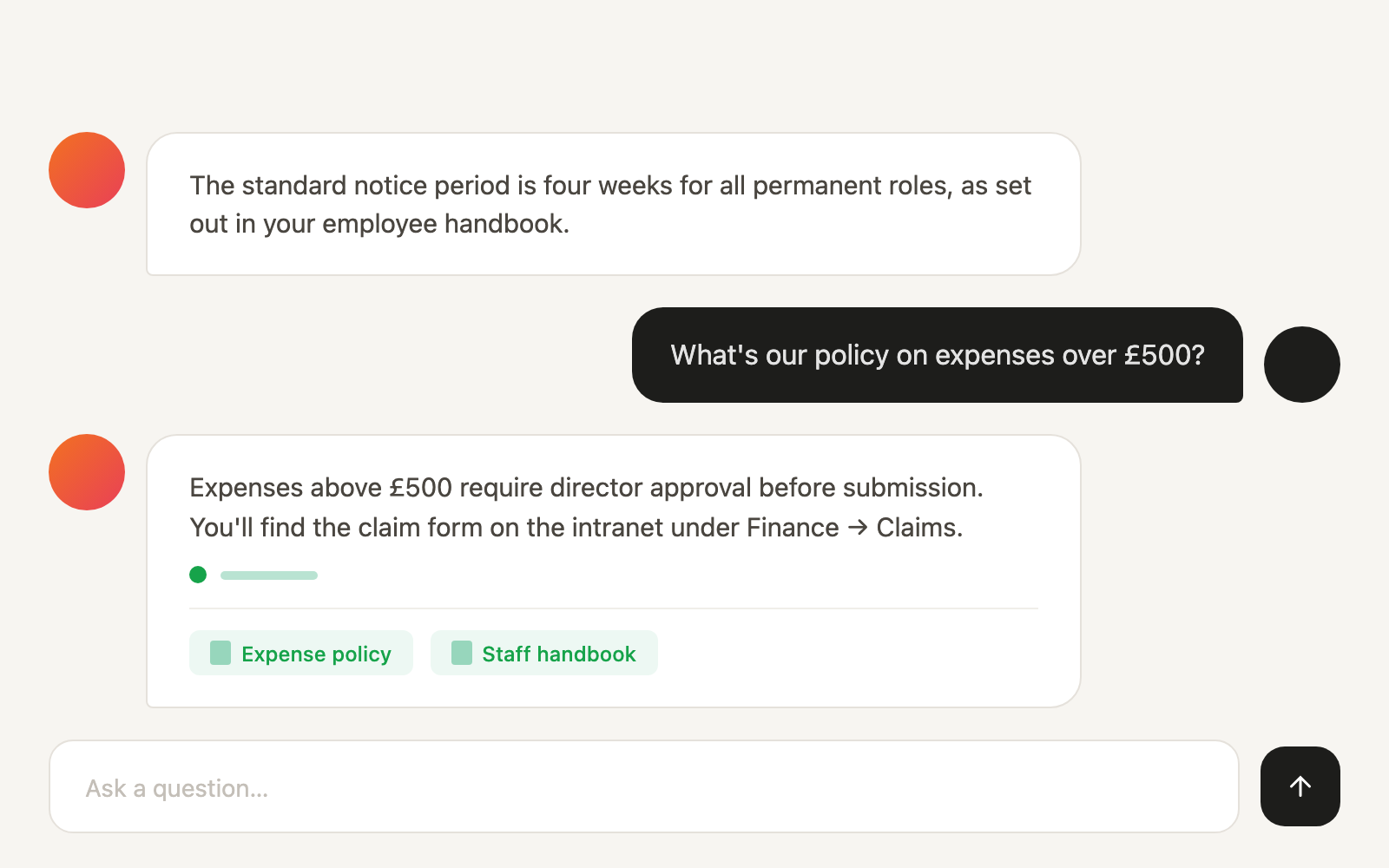
Knowledge assistant
Answers drawn from your own documents, not the open internet. Staff ask a question in Slack or a web widget and get a grounded reply with its sources, so it will not invent an answer.
Vector store · Claude · OpenAI · Slack · Web
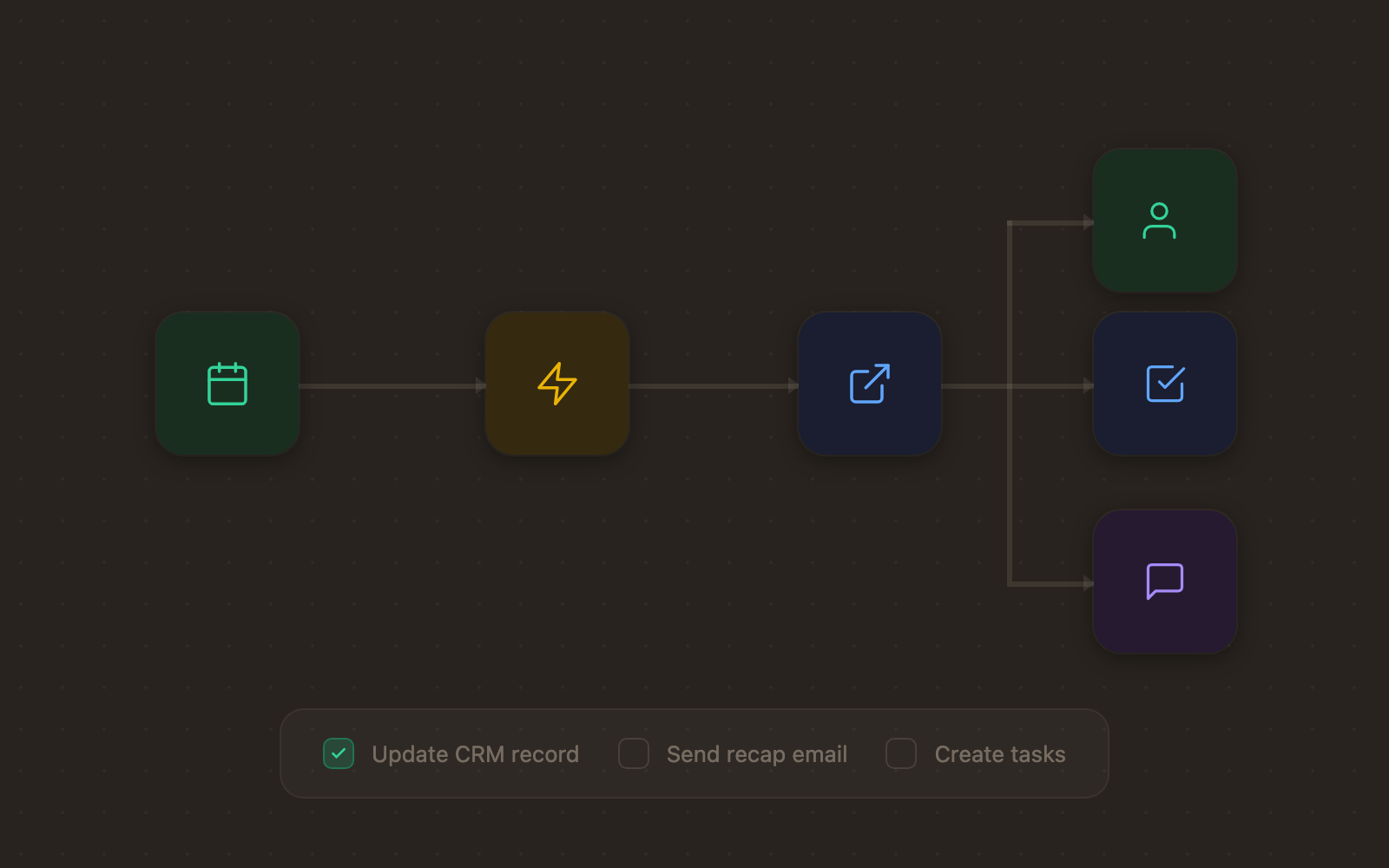
Meeting follow-through
Capture every meeting and turn it into action. Your note-taker hands over the summary, or we set one up, and the automation routes the decisions, owners and due dates into your CRM and tasks, then drafts the follow-up for sign-off.
Granola · Otter · Claude · OpenAI · CRM
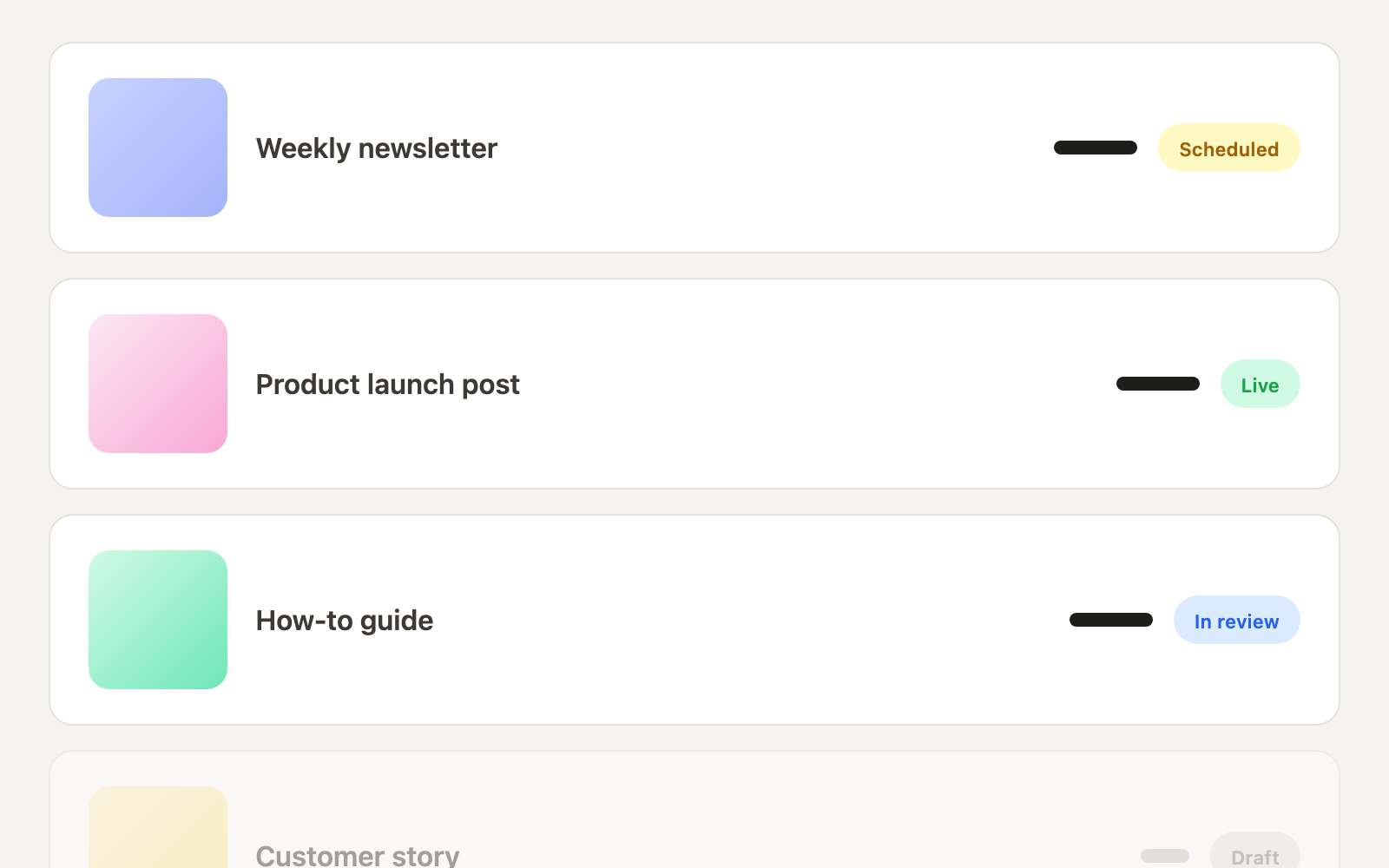
Content engine
Turn one idea into a week of content. The model researches a topic, drafts in your brand voice, generates an image and stages everything for one-click approval before it publishes. We run this one ourselves.
Publishing pipeline · Claude · OpenAI · CMS
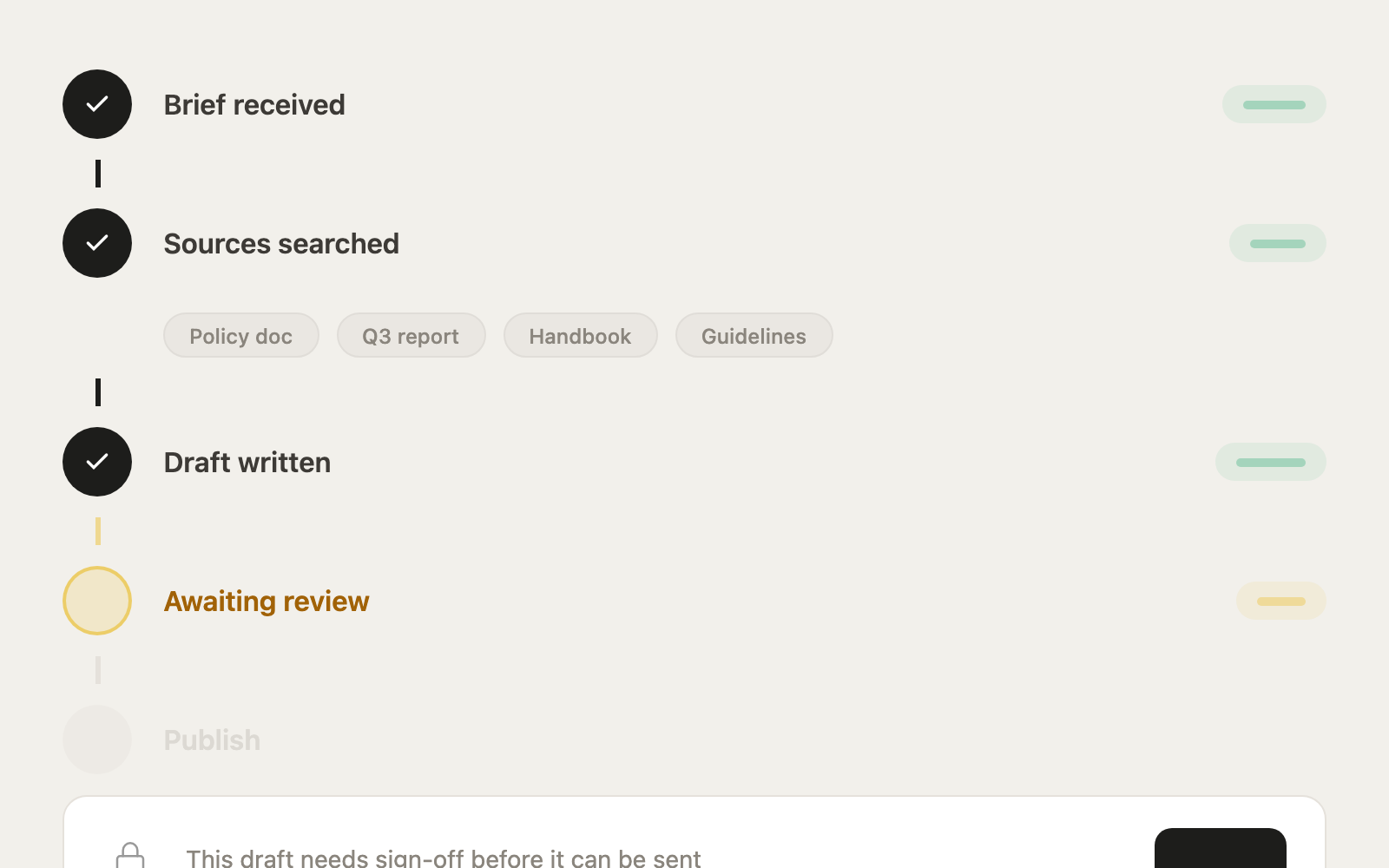
Research agent with sign-off
A research task that runs itself, then waits for your approval. Give it a brief and it decides where to look – your knowledge base, an API, the live web – gathers, drafts with citations, and pauses for a human to approve before anything goes out.
Agent framework · Claude · OpenAI · Vector store
We teach your team to run it
Most agencies hand you a workflow and a login. We hand you the workflow and the ability to run it without us. Every build includes:
A prompt library
The tested prompts behind your automation, written for whichever model the job uses (Claude, OpenAI or Vertex) and documented so anyone on your team can read and adjust them.
A short playbook
When to use it, how to check the output and what to do if something looks wrong, drawn from a decade of running production software in Laravel.
A usage and governance note
What is safe to put into AI tools and what is not, written for UK GDPR, including the human approval gates we build into sensitive workflows.
A team training session
The engineers who built your workflow walk your people through running and maintaining it, so the knowledge comes straight from the source.
A golden-path reference
Your one well-built workflow becomes the template for the next, built the way we build our own systems, with current standards like the Model Context Protocol (MCP) for connecting AI to live tools.
The usage and governance note sets out how we have built your workflow and what we recommend. It is not legal advice and is not a substitute for it.
Automation Discovery
Two weeks. Credited in full against build cost. Proceed with an automation build within 30 days and your £1,500 is applied to the total.
£1,500
-
We map the workflows costing you time
-
We tell you which one is worth automating — or that none are
-
You get a build plan, a workflow diagram and a fixed price
-
Yours to keep, whoever builds it
What the build costs
Workflow
£6,000 +VAT
Inbound triage, routing, lead scoring. Classification with a written reason attached, not a black-box score. 2–3 weeks.
Assistant
£12,000 +VAT
Answers grounded in your own documents, with sources. Meetings turned into CRM actions. 4–6 weeks.
Engine
£22,000 +VAT
Content engines and agentic research that pauses for your sign-off. 6–10 weeks.
Discovery fixes which one you need, and the price, before you commit to anything.
Every build is production standard, integrated with the tools you already use and tested on your real data before go-live. You get full documentation and a workflow diagram, the prompt library behind it, a UK GDPR usage and governance note, and a live training session run by the engineers who built it. Thirty days of support after launch. You own all of it.
AI Care from £450/month afterwards — monitoring, model migration, prompt tuning and a monthly report. Optional, and we will tell you if you do not need it.
We agree what success looks like before we start. If the workflow does not do the agreed job within 30 days of go-live, we put it right.
Questions & Answers
What does AI automation cost, and what do I get for it?
Automation Discovery is £1,500 +VAT over two weeks, and it comes off your build in full. Builds are £6,000 for a Workflow, £12,000 for an Assistant and £22,000 for an Engine, depending on what the automation has to do. Discovery fixes which one you need, and the price, before you commit to anything. All fixed price - we don't bill hourly.
Why are you more expensive than agencies charging a few hundred pounds?
Because a few hundred pounds buys a Zap with a prompt in it. What we build has an audit log of every automated action, human approval gates on anything sensitive, a model-agnostic layer so a price rise or an outage doesn't mean a rebuild, and a governance note written for UK GDPR. That's the difference between something that demos well and something that survives a compliance conversation. If your workflow genuinely doesn't need any of that, a cheaper shop is the right call and we'll tell you so.
What does it cost to run once it's live?
£40–150 a month for a Workflow, £80–300 for an Assistant and £150–500 for an Engine at realistic volumes. That covers orchestration, hosting and model API usage, paid by you directly to the providers rather than marked up through us. Model prices fell through 2026 rather than rising, so running these is rarely where the money goes.
Why do you only build one automation?
Because one built properly beats five built halfway. We take the process costing you the most time, build that, and earn the next one. MIT's 2025 research found only around 5% of AI pilots reach measurable value - but the same study found projects delivered with an outside partner succeeded 67% of the time, against 33% for teams building it themselves. Starting narrow, with someone who has done it before, is how you stay out of the failed majority.
Why not just use Zapier?
Zapier is fine for two or three simple steps. Past that it follows fixed rules, breaks on edge cases, loses data when something errors, and keeps no audit trail for compliance. Multi-step workflows also run £100–300 a month before you count the time someone spends nursing them. A professional build costs more up front and doesn't fail the same way - and if Zapier genuinely covers what you need, use Zapier.
Is my data safe, and will it still work in six months?
Encrypted credentials, an audit log of every automated action, retention periods you control, UK GDPR throughout, and human approval gates on anything sensitive - the AI drafts, a person approves. Since May 2026 the ICO has been under a statutory duty to produce a code of practice on AI and automated decision-making (SI 2026/425). It isn't published yet — realistically 2027 — and it will set out good practice rather than new obligations; the binding law remains UK GDPR and the Data Protection Act 2018. We build to it now because it's where the regulator is heading. Models run through a model-agnostic layer, so if a better or cheaper one appears, or one has an outage, we swap it in configuration rather than rebuild.
Let us find the one thing worth automating
Book a free 30-minute consultation. We’ll look at your workflows and tell you honestly whether automating one of them is worth it. No commitment.